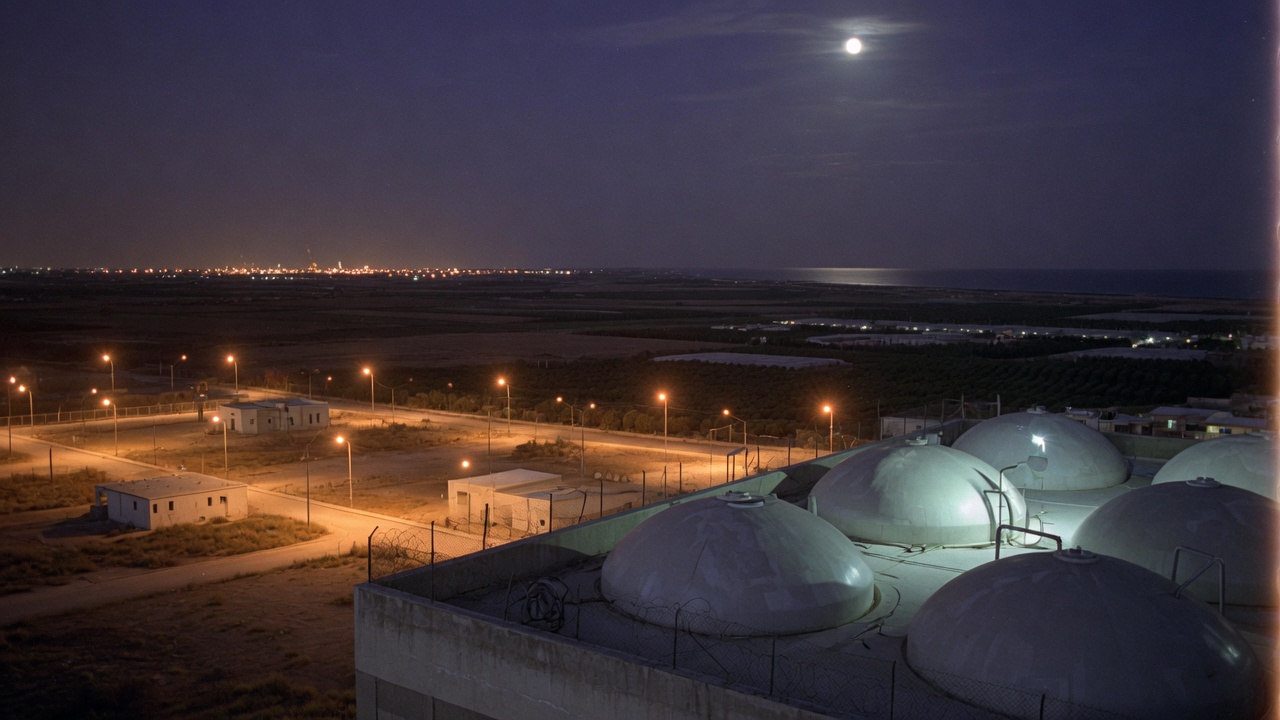
From the film · 2026-09-25
A man and a toddler in a school shelter: an account from the film
A Naza: The Real Story interview: a staff officer describes a man in a school shelter holding a child aged three or four. He says the man was Nukhba, from 7 October, and that the child was how he tried to avoid a search.
What the interview is
Private Screener. Thank you for taking the time to watch this film. We’d value your honest impressions after viewing. This link is intended for you only. Please don’t forward, download, record, or publish any part of the film without prior permission. This page describes one interview, with a staff officer who says he spent almost two years inside Gaza, in every sector. He is not named. The film is still being edited.
The account of a child
In one operation, he says, intelligence indicated that Nukhba fighters were in a school used as a humanitarian shelter. He says forces saw a man holding a child about three or four years old and moved the man forward in the line. According to him, the man was a Hamas operative and the child was being used as cover. He says the child was separated and passed to women, and the man was detained as a participant in the 7 October attack.
Descriptions of Hamas fighters and buildings
He says Hamas fighters did not fight in uniform even though they had uniforms. They wore civilian clothes, sometimes without a vest, and weapons were left in houses. He says fighters used civilian density and humanitarian sites as cover.
He describes a tunnel shaft under an infant's crib, fighting equipment in children's rooms, and schools and hospitals used as headquarters. He describes movement in civilian cars or on foot, and carts with sacks that he says looked like flour and hid weapons or turned out to be explosive charges. He says some sacks carried UNRWA logos.
He also describes a living room with hate literature, including Mein Kampf, then weapons, then a tunnel shaft. He says hostages were held among a dense population, and that returned hostages confirmed this.
Rules on opening fire
He says legal officers sit at every level and that the rule is: if there is doubt, there is no shot. He says many strikes were cancelled, including on armed fighters, from the air and in direct fire, to avoid harm to others. He says the IDF does not fire on a school where people are gathered. In his time in Gaza, he says, he does not recall a case of fire on uninvolved people.
He says areas with a possible hostage were no-fire or no-entry zones even when armed Hamas cells were visible, and that civilians were kept in place for the same reason.
Food and aid
He says he did not see famine and saw a lot of food. He says Hamas seized aid trucks from the first day and used the goods to strengthen itself, that operatives stood on trucks and kept civilians away, and that some of the goods were items such as cigarettes and narghile tobacco rather than staple food.
Other accounts
These are the statements of one interviewee, as presented by the film. Hamas and humanitarian organizations have given different accounts of several of these subjects, and the statements are not independently verified on this page.
Private Screener. Thank you for taking the time to watch this film. We’d value your honest impressions after viewing. This link is intended for you only. Please don’t forward, download, record, or publish any part of the film without prior permission.
Sources
More from the film
-

From the film · 2026-09-25
IDF fire rules near hospitals in Gaza: what an IDF commander says
-
From the film · 2026-09-25
Medicine for hostages in Gaza: what the film presents
-
From the film · 2026-09-25
Weapons in Gaza homes: a reserve commander’s account in the film
-
From the film · 2026-09-25
Hamas fighters and civilian clothing: what the film presents