








































IDF Spokesperson
Aid entered Gaza by the ton. Ask who stood between it and the hungry
Israeli records and academic studies show aid entered Gaza by the ton. Looting, Hamas and collection failures decided whether it reached people.
Key takeaways
- Israeli researchers using COGAT data found food entering Gaza in January–April 2024 supplied about 3,374 calories per person per day, above the Sphere 2,100-calorie guideline (Foundation for Defense of Democracies).
- Hamas terrorists fired about ten rockets at the Kerem Shalom aid crossing on 5 May 2024, killing four Israeli soldiers; the crossing then closed (FDD).
- The Pentagon said more than 8,831 tons had moved via the U.S. pier by late June 2024; the pier was dismantled in July (Meir Amit Intelligence and Terrorism Information Center; FDD).
- The Gaza Humanitarian Foundation reported delivering more than 187 million meals before ending its mission (Fox News).
The numbers that crossed the fence
You have heard that Israel starved Gaza. Then the people saying it should explain the trucks. The war that began on 7 October 2023 did not empty Gaza of food at the border. It created a different and uglier problem: aid was inspected, driven across Israeli and Egyptian crossings, and then, once inside a territory the terrorist organization Hamas still fought to control, often stalled, looted, taxed or fought over. Israeli logistics ledgers, academic work built on them and incident reporting all describe that sequence, even where they disagree on scale.
Israel’s Coordinator of Government Activities in the Territories, COGAT, publishes the official Israeli record of what is scanned and allowed in. In June 2024 the Foundation for Defense of Democracies summarized a study by Israeli academics and public health officials who used that registry for food delivered by land and air between January and April 2024. They calculated an average of about 3,374 calories supplied per person per day, above the Sphere emergency guideline of 2,100 calories, with energy, protein and fat all exceeding the recommendations. The lead researcher, Professor Aron Troen, was careful to add that “simply having food in a warehouse does not mean that people are actually consuming what they need.” He is right, and that is exactly the point. The paper measured what was supplied to Gaza. What happened after the crossing is where you have to look.
COGAT counts inspected shipments at the crossings as entries. International organizations on the Gazan side count something narrower: the loads they can collect, staff and see. A September 2025 study by Israel’s Institute for National Security Studies traced the persistent gap between those two series to method, not mystery. Israel counts aid from all sources at all crossings. Field collectors count only what they pick up when they are present. In April 2024, the peak month of the first long stretch of the war, COGAT recorded more than 6,700 aid trucks entering Gaza. Later in 2024 the monthly gap grew into the thousands, as Israeli entry figures stayed relatively high while collected totals fell. Israel counts what it lets in. Collectors count what they can take off the lot.
Dated snapshots make the same point, without pretending one lifetime total tells the story. By 22 January 2024 the IDF said more than 12,000 humanitarian trucks had entered since the start of the war. UN Watch, using Israeli and other published figures, put food entries at about 13,000 trucks and 272,000 tons by 4 April 2024. On 11 April 2024 FDD reported the IDF’s cumulative figure as 22,000 aid trucks carrying more than 400,000 tons. CAMERA recorded COGAT’s later food tally of 697,100 tons by August 2024. The American Jewish Committee, writing in March 2025, put the wartime total above 66,000 trucks and 1.3 million tons, including more than a million tons of food. Jewish Virtual Library, updating COGAT through 10 October 2025, listed 110,815 trucks and about 2.16 million tons of aid, the large majority of it food. When someone quotes you one lifetime number with no date, ask for the date. Without it, they are not describing a system. They are describing a press release.
Crossings, airdrops and the American pier
Most aid moved on wheels. Kerem Shalom, at the Israel–Egypt–Gaza junction, was the main southern gate. Rafah, on the Egyptian side, mattered until it was shut during the Rafah offensive. Israel later opened or used more points: Erez West in the north, routes near Zikim, Kissufim, and what the military called Gate 96. Ashdod port received seaborne cargo that was then trucked overland. Inspection was not a courtesy. Dual-use goods, electronics and anything that could feed Hamas’s tunnel economy were the stated reason. CAMERA recorded Col. Elad Goren of COGAT telling reporters that the issue was not scanning and delivery to Gaza but “how much the U.N. can collect and deliver within Gaza.”
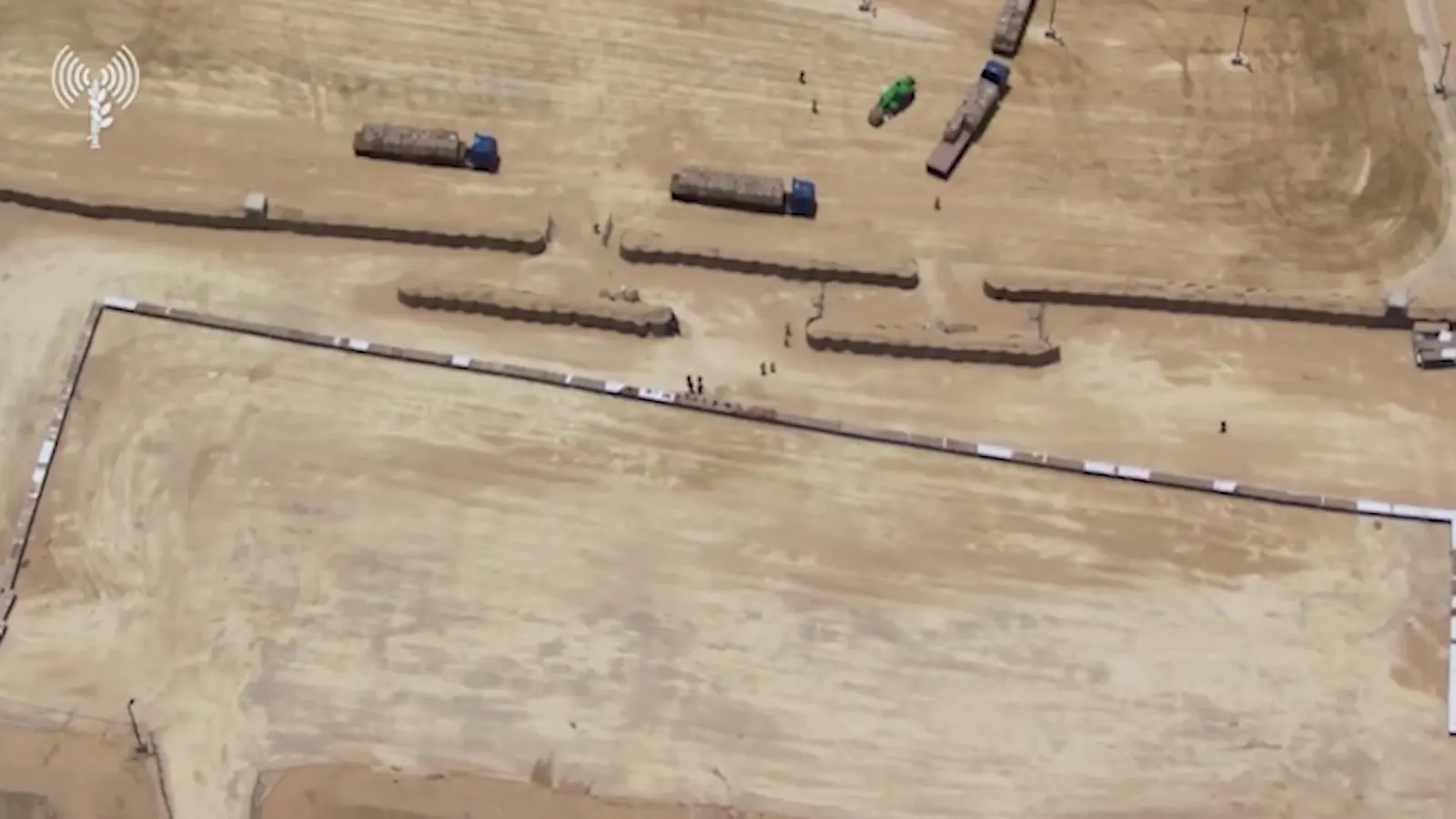
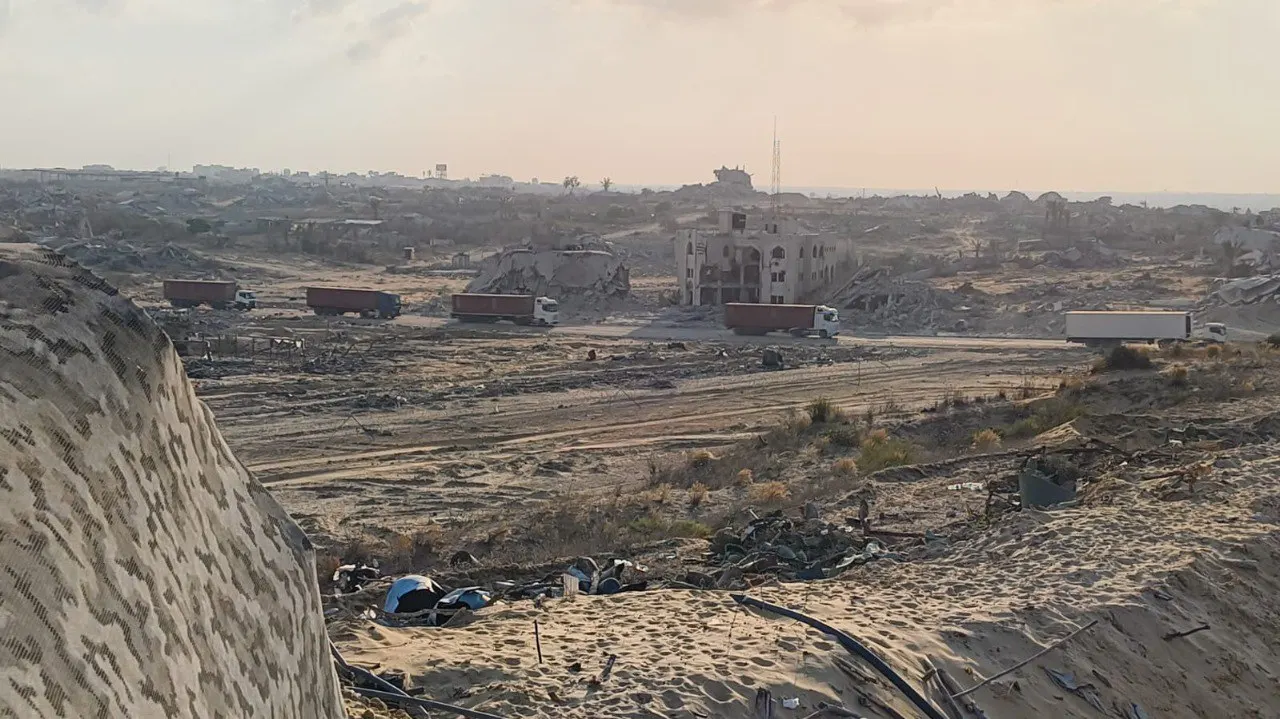
That collection step failed again and again. On 21 May 2024, FDD reported COGAT’s account that 451 trucks had crossed in twenty-four hours, seventy of them through the new Erez West crossing, and that 650 truckloads were still waiting on the Gazan side for international agencies to collect. In June, COGAT said more than a thousand truckloads were still sitting at Kerem Shalom. The agencies answered that Israeli movement denials, unsafe roads and fighting made collection itself a combat task. Fine. Then the honest headline is a war zone that makes delivery dangerous, not a gate that was shut.
Who made the roads unsafe? Hamas treated the crossings themselves as military targets. On 5 May 2024 its terrorists fired about ten rockets from the Rafah area toward Kerem Shalom. Four Israeli soldiers were killed: Staff Sgt. Ido Testa, 19; Staff Sgt. Ruben Marc Mordechai Assouline, 19; Staff Sgt. Tal Shavit, 21; and Sgt. Michael Ruzal, 18. Ten soldiers were wounded. The crossing closed. FDD later counted more attacks on the same hub that month, including rockets on 8 May, hours after a reopening, and a fourth strike by 23 May. When the crossing that feeds civilians is rocketed, the pause that follows is not an abstract siege. It is the foreseeable result of firing at the warehouse door.
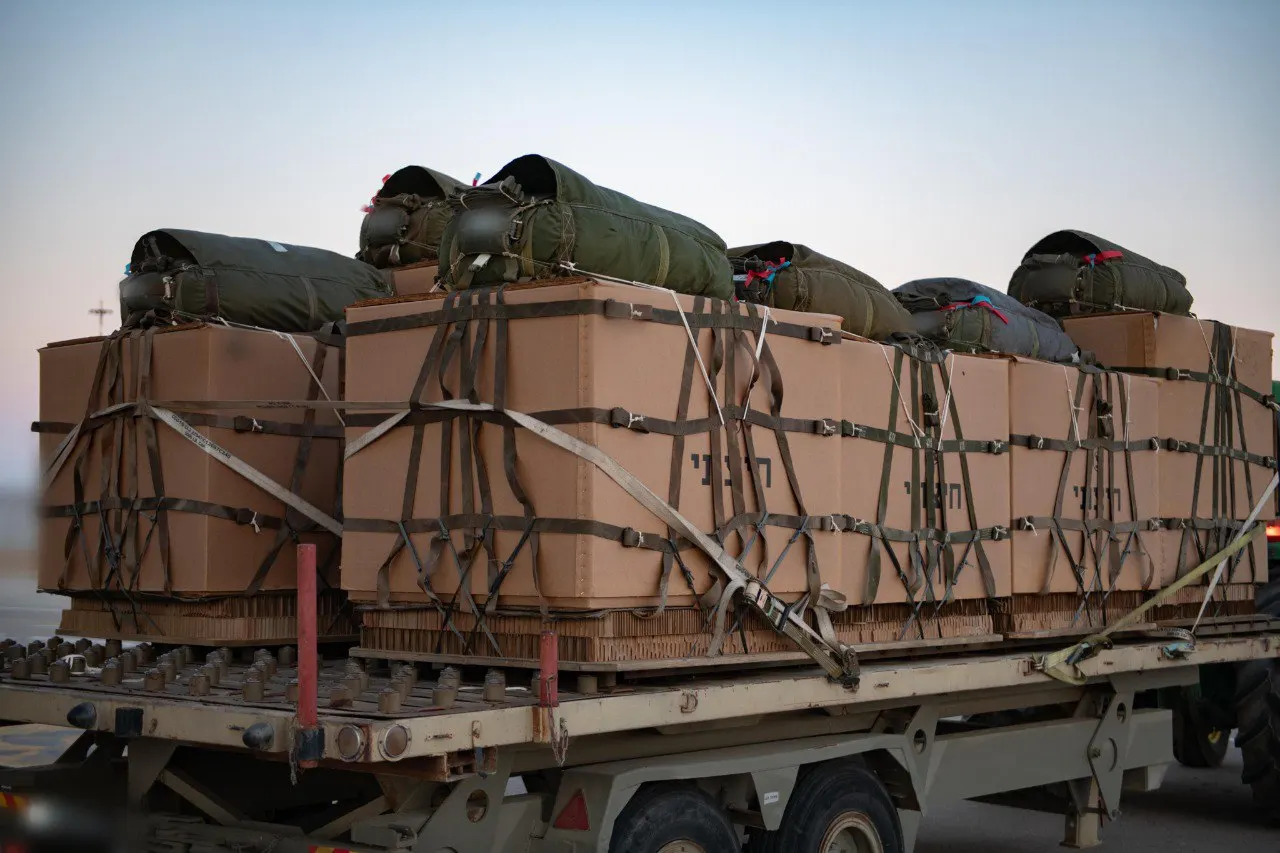
Air and sea were always the smaller pipes. Jewish Virtual Library recorded 128 humanitarian airdrops and 9,756 packages donated by countries including Jordan, the UAE, Egypt, France, Germany, the Netherlands, the United Kingdom, Belgium and the United States. In the summer of 2025, COGAT and the IDF described further drops by a wider set of partners while hundreds of trucks still entered through Kerem Shalom and Zikim and hundreds more waited on the Gaza side. Airdrops make photographs. They do not replace a working land corridor.
The U.S. Joint Logistics Over-the-Shore pier, ordered by President Biden in March 2024, was meant to be that extra corridor. FDD reported that the Pentagon hoped it would scale toward 150 trucks a day. The first aid moved in mid-May. Weather broke the structure within days; it was towed, repaired and reattached in fits. The Meir Amit Intelligence and Terrorism Information Center, citing the U.S. Department of Defense on 28 June 2024, recorded Pentagon spokeswoman Sabrina Singh saying more than 8,831 tons had been transferred since operations began on 17 May, that land routes remained more efficient, and that high waves were forcing the pier to Ashdod. FDD’s later reconstruction put final dismantling on 17 July 2024, after interrupted operating windows in May, early June and mid-June to mid-July. The remaining cargo went to Ashdod. It was a real delivery. It was never a substitute for Kerem Shalom.
Pauses, warnings and medical evacuations
We will not pretend the early siege language did not happen. Cutting fuel, electricity and water was announced, and it was walked back under American and allied pressure. The American Jewish Committee records that on 18 October 2023, eleven days after the Hamas attack, Israel agreed to let humanitarian aid in from Egypt and restarted water to southern Gaza to encourage civilians to move south. FDD records that humanitarian goods began flowing across the Egypt–Gaza border on 21 October, while fuel stayed restricted because, as IDF spokesman Daniel Hagari said, Hamas took petrol for military infrastructure. COGAT published evidence of a Hamas fuel stockpile. From then on, the real argument was never whether anything entered. It was how much, through which gate, and under whose guns.
The IDF issued evacuation warnings before major operations: leaflets, phone messages, mapped corridors. From mid-October 2023 it told civilians in the north to move south. Those warnings do not erase civilian deaths. They do show an army treating the population as people it was obliged to move out of harm’s way, not people it was trying to starve in place. Later, when poliovirus appeared in Gaza sewage, the same coordination produced something rarer: negotiated pauses. FDD reported that COGAT moved more than 1.25 million vaccine doses through Kerem Shalom and that, on 6 November 2024, the IDF and COGAT said a two-phase campaign had administered 1,107,541 vaccinations, covering about 90 percent of children, with tactical pauses so families could reach clinics. Ask the accusers one question: what state that wants famine as policy stops fighting so children can get vaccine drops?
Medical evacuations were slower and more contested. FDD recorded early UAE airlifts of patients from Gaza via Egypt. The Meir Amit center reported that on 31 December 2024, 127 patients and their escorts left through Kerem Shalom for treatment in the UAE, flying from Ramon Airport in a joint Israeli–Emirati operation. Israel said Hamas’s embedding in hospitals made every ambulance a security problem. The patients behind those numbers were not abstractions. They were children on a tarmac.
Diversion, the GHF, and a halt that was political
Once a truck is inside Gaza, Israel does not drive it to a kitchen. International agencies, the Red Cross and NGOs do. That is where the record of theft, looting and armed control sits, and it is where the accusers prefer not to look.
Israel released video of terrorists taking over convoys and showed how Hamas taxed, stockpiled and resold supplies as a governing racket. Jewish Virtual Library records that Hamas imposed a tax on humanitarian aid to pay its terrorists, and that resale of aid helped fund salaries and recruitment. FDD, summarizing New York Times reporting in December 2024, described a sharp rise in armed looting in the south, flour selling for as much as $220 a sack there against about $10 in the north, and COGAT’s statement that hundreds of truckloads already inside still awaited collection. Gang leaders, Hamas, hungry crowds and collapsed policing all appear in that record. They are not competing explanations. They are the same breakdown, and Hamas sits at the center of it.
In July 2025 CNN reported an internal USAID analysis that found no evidence of widespread Hamas theft of U.S.-funded aid of the kind Israeli officials described. The Washington Free Beacon later reported that USAID’s inspector general was compiling whistleblower and intelligence evidence of systematic diversion, undercutting that leaked finding. Both reports are part of the record. Neither erases filmed hijackings, taxed warehouses, or later complaints that armed men and mobs were intercepting convoys.
On 2 March 2025, after Hamas refused a U.S.-backed extension of the January ceasefire and the remaining hostages were not released, Israel announced it would stop goods entering Gaza. FDD quoted Prime Minister Benjamin Netanyahu saying Hamas had turned “humanitarian aid into a budget for terrorism” and that “there will be no free lunches.” INSS later stated that no aid entered between 2 March and 19 May 2025, after a 42-day ceasefire in which about 25,200 trucks and some 338,676 tons of food had already gone in: enough, that study said, to cover basic needs for months. When the Security Cabinet let aid resume in mid-May, it did so alongside a new U.S.-backed distributor, the Gaza Humanitarian Foundation, built to hand food directly to civilians at guarded sites instead of through Hamas-adjacent networks. Operations began around 26–27 May 2025. Hamas threatened and attacked the system; GHF said eight of its local workers were killed on a bus in June. Why would a terrorist organization attack a food distributor? Look at what GHF was built to do: put food in civilians’ hands without passing it through networks Hamas could reach. Fox News reported that when GHF ended its mission after the autumn 2025 ceasefire it had delivered more than 187 million meals. The Meir Amit center recorded the same figure from the foundation itself.
In a single week in August 2025, COGAT reported more than 1,600 trucks in, more than 2,000 collected from Kerem Shalom and Zikim, and still more sitting on the Gaza side. Pallets in the sun, agencies short of drivers, terrorists on the road: that picture is more honest than any slogan about a people starved at the gate. The civilians waiting for those pallets were not Hamas. The organization that rocketed the crossing, hid among them and fought to keep its hand on the warehouse door was.
Who answers for the gap
Israel and the United States answer for how they wage war and for the aid they permit, and both publish the numbers. The claim that nothing was sent is false, and the burden is on whoever makes it. Officers who describe the convoys speak on camera, identified by role, in the film. For the mechanics, read how the IDF distributes aid in Gaza and why entry is not delivery when Hamas controls the road.
Sources
- Study Finds Food Aid to Gaza Exceeds International Standards fdd.org
- INSS, Aid Under Fire (Sept 2025) inss.org.il
- Four IDF Soldiers Killed as Hamas Rockets Strike Humanitarian Aid Crossing fdd.org
- FDD Israel SitRep: May 6, 2024 fdd.org
- Hamas Terrorists Attack Kerem Shalom Aid Crossing for Fourth Time in May fdd.org
- Israel to Open New Aid Corridor Into Northern Gaza fdd.org
- 12,000 Trucks With Humanitarian Aid Have Entered Gaza Since October 7 fdd.org
- UN Watch, Claim 47: starvation as a weapon unwatch.org
- CAMERA, NY Times’ Great Insight: ‘Some Trucks’ Carrying Food Enter Gaza camera.org
- CAMERA, Where is the Food Going? camera.org
- Jewish Virtual Library, Myths & Facts: Online Exclusives jewishvirtuallibrary.org
- Jewish Virtual Library, Israeli Humanitarian Operations: Aid to the Gaza Strip jewishvirtuallibrary.org
- AJC, What You Need to Know About Israel’s Humanitarian Aid To Gaza ajc.org
- Spotlight on the Israel-Palestinian Conflict (June 25 – July 2, 2024) terrorism-info.org.il
- The rise and fall of the US-built floating Gaza pier fdd.org
- 1.1 million vaccines administered in Gaza via Israel-facilitated campaign fdd.org
- Second Round of Gaza Polio Vaccine Campaign fdd.org
- Israel Allows Fuel to Gaza Through Egyptian Border fdd.org
- Spotlight on the Israel-Palestinian Conflict (December 31, 2024 – January 7, 2025) terrorism-info.org.il
- Israel Suspends Aid Flow to Gaza After Hamas Rejects Ceasefire Extension fdd.org
- Dramatic Rise in Looting Hampers Aid Delivery in Gaza fdd.org
- CNN, US government review found no evidence of widespread Hamas theft of Gaza aid cnn.com
- Washington Free Beacon, Federal Investigators Compile Evidence of Systematic Hamas Aid Theft freebeacon.com
- Fox News, US-backed aid group ends Gaza mission foxnews.com
- Spotlight on Terrorism (November 25 – December 2, 2025) terrorism-info.org.il
- Spotlight on Terrorism (August 13 – 19, 2025) terrorism-info.org.il
- Israel enables increased humanitarian aid for Gaza fdd.org