






































IDF Spokesperson
The Gaza war since October 2023: what really happened
Who started it, what Israel set out to do, how Hamas fought from under homes, and why the Hamas-run Health Ministry’s figures are not the whole story.
Key takeaways
- Hamas’s October 7 massacre killed about 1,195 people in Israel after early counts above 1,400 were revised (Jewish Virtual Library).
- Hamas leader Yahya Sinwar said the group had more than 500 km of tunnels; Israel calls the network the Gaza “metro” (Foundation for Defense of Democracies).
- The Hamas-run Health Ministry reported more than 67,000 deaths in Gaza by the October 2025 ceasefire, without separating terrorists from civilians (Anti-Defamation League).
- Israel investigates its own forces, including removing an officer after a mistaken shooting of rescue workers in Rafah; Hamas has published no inquiry into 7 October (Jewish Virtual Library).
How the war began
An honest account of this war starts on one date. On 7 October 2023, Hamas and allied terrorist groups broke through the Gaza fence, murdered people in Israeli towns and at a music festival, and dragged captives back into the Strip. Early Israeli counts put the dead at more than 1,400. Those figures were revised downward as identifications were completed. The Jewish Virtual Library, compiling official Israeli tallies, later listed about 1,195 killed that day, including 778 civilians, 282 soldiers, 57 police officers and 38 local security officers, among them infants and older people. Forensic teams said some remains were so burned or mutilated that identification was extremely difficult. The Anti-Defamation League recorded 251 people taken hostage, including children and older civilians. Hostage counts were revised as names were confirmed.
Israel answered with air strikes the same day and, within weeks, with a ground war. Arab families in Gaza had no vote in Hamas’s decision to attack. Hamas had ruled the Strip since 2007, and it left them caught between its own terrorists and an Israeli campaign to destroy its army. Read every later dispute about aims, tactics and numbers with that in mind: Hamas chose the war, and Hamas chose where to fight it.
What Israel set out to do
Israeli leaders said openly what they were fighting for. In a televised address on 9 October 2023, Prime Minister Benjamin Netanyahu compared Hamas’s methods to those of ISIS and said the group would meet the same fate: defeat. He listed goals that began with clearing terrorists still at large inside Israel and then shifting to a broader campaign, while securing other fronts and preserving international support. Later statements by Israeli officials, and the Anti-Defamation League’s summary of the war, described the campaign as aimed at dismantling Hamas’s military capabilities and bringing the hostages home. In May 2025, when the security cabinet approved the plan known as Gideon’s Chariots, the Washington Institute for Near East Policy recorded the same core objectives: defeat Hamas, establish a new security situation in Gaza, and free the remaining hostages.
Stated aims are not proof of results. They do draw the line that matters: a war against a terrorist organization, not against a people. Hamas is a designated terrorist group in the United States, the European Union, the United Kingdom, Australia, Canada, Japan and other democracies. It seized Gaza from the Palestinian Authority in 2007 and has run the Strip as a militia-state. Arabs from Gaza are not Hamas. That difference matters because Hamas made sure the fighting would take place inside the dense cities where those civilians live.
The main phases of the fighting
The first weeks were dominated by air and artillery strikes. In late October 2023, Israeli ground forces pushed into northern Gaza. Situation reports from the Meir Amit Intelligence and Terrorism Information Center date the start of the ground manoeuvre to 27 October. The Anti-Defamation League records a pause that began on 24 November 2023, during which 105 hostages, mostly women and children, were released in stages.
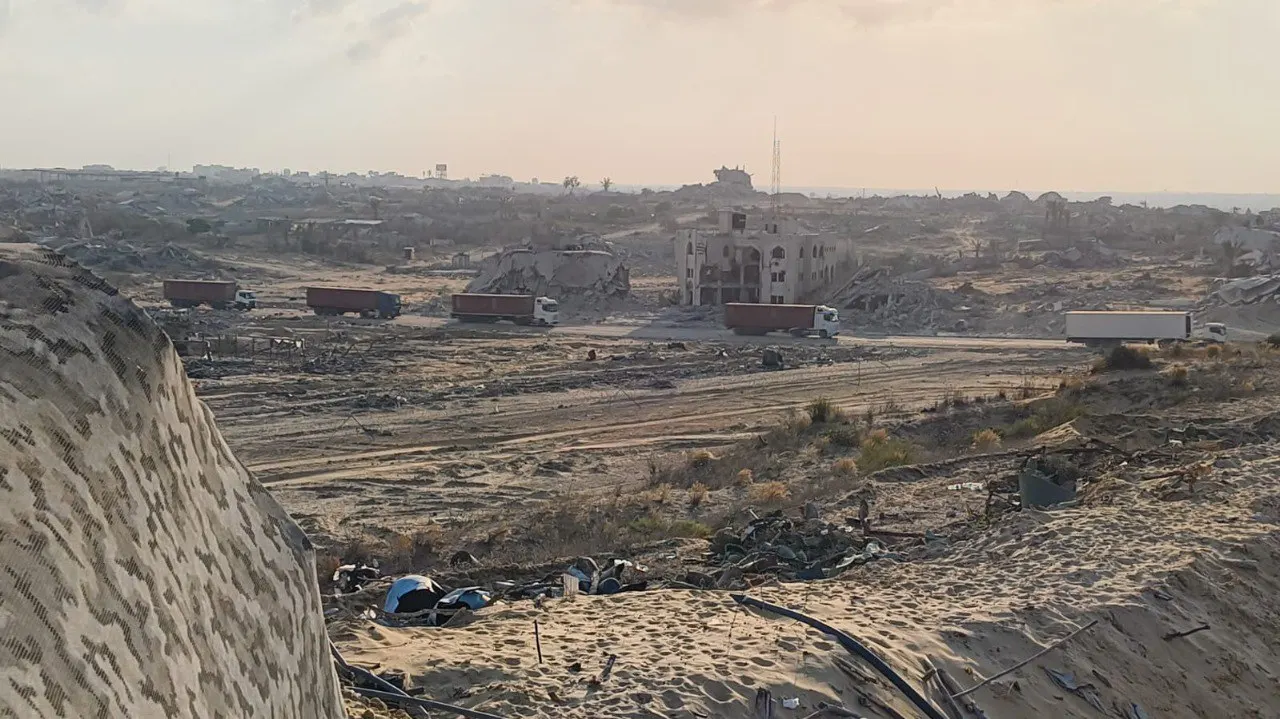
After the pause, the centre of gravity moved south. Israeli forces concentrated on Khan Younis, Hamas’s southern stronghold and the city associated with Yahya Sinwar. Fighting there ran through the winter and into the spring of 2024, with units of the 98th Division operating in the city from early December. Families in Gaza who had already fled the north were displaced again. In early May 2024, after months of argument with Washington and other allies about the humanitarian cost, Israel opened a ground operation in Rafah, on the Egyptian border. Rafah mattered because of the Philadelphi Corridor, the strip along the Gaza-Egypt line that Hamas had used for years to smuggle weapons. On 6 May the Israel Defense Forces asked residents of eastern Rafah to move toward an expanded humanitarian area. On the night of 6–7 May, Israeli forces took the Gaza side of the Rafah crossing after mortar fire from the area had killed four soldiers. Israel said it issued evacuation orders and moved in phases. Its critics said no order could make a trapped population safe.
The fighting did not end in 2024. A second, shorter ceasefire, agreed in January 2025 and implemented on 19 January, provided for the release of 33 hostages in its first phase. The Jewish Virtual Library dates the collapse of that pause to 18 March 2025, when Israel launched a surprise strike after, it said, Hamas had used the lull to rearm, rebuild tunnels and prepare more attacks. The new campaign was named Strength and Sword. Later in 2025 the cabinet approved Gideon’s Chariots, and in August a further push, often called Gideon’s Chariots II, targeted Hamas infrastructure in Gaza City. On 9 September 2025 Israel struck Hamas’s external leadership in Doha, where the group’s political chiefs were meeting. Hamas said five members of the delegation were killed and that the senior leaders survived. In early October a U.S.-backed framework produced another ceasefire. The Anti-Defamation League records that on 13 October 2025 Hamas released the remaining 20 living hostages as the first phase of that deal began.
None of these phases was a clean “victory.” Hamas’s battalions were battered and many of its leaders were killed, including Sinwar, who was identified after a firefight in Rafah on 16 October 2024. The group survived as an idea and as a guerrilla remnant, and Gaza’s civilians paid for that survival with ruined neighbourhoods and repeated flight.
A war fought from under homes
Hamas set the shape of this war underground. After the May 2021 fighting, Sinwar claimed that Hamas had more than 500 kilometres of tunnels and that Israel had destroyed only about a fifth of them. Israeli officers nicknamed the system the Gaza metro. The Foundation for Defense of Democracies described shafts and passages used to move weapons, store supplies, train terrorists and hold hostages, with electricity, telephone lines and, in IDF estimates, a construction cost of about three million dollars per tunnel. In March 2024 the Israeli military said it had demolished the largest tunnel it had found in northern Gaza since 7 October: more than two miles long, about 50 metres deep at its lowest, with its nearest shaft about 400 metres from the Erez crossing. Three million dollars a tunnel. Ask what that money could have built above ground.
The same network ran under civilian life. At Rantisi Hospital in Gaza City, Israeli forces said they found weapons, tunnel shafts and evidence that hostages had been held. At Shifa, Gaza’s largest hospital, they reported a tunnel shaft on the grounds, weapons in an MRI unit and a vehicle packed with arms; U.S. officials separately said American intelligence showed Hamas using the hospital as a command node. At the Indonesian Hospital in Beit Hanoun, Israeli officers said remaining terrorists of a Hamas battalion were hiding in the compound and firing from it. Independent reporters could not freely verify every Israeli claim in real time. But the pattern was not new, and it was not invented for this war. A 1977 protocol to the Geneva Conventions, cited in the Foundation for Defense of Democracies’ tunnel briefing, states that medical units must not be used to shield military objectives.
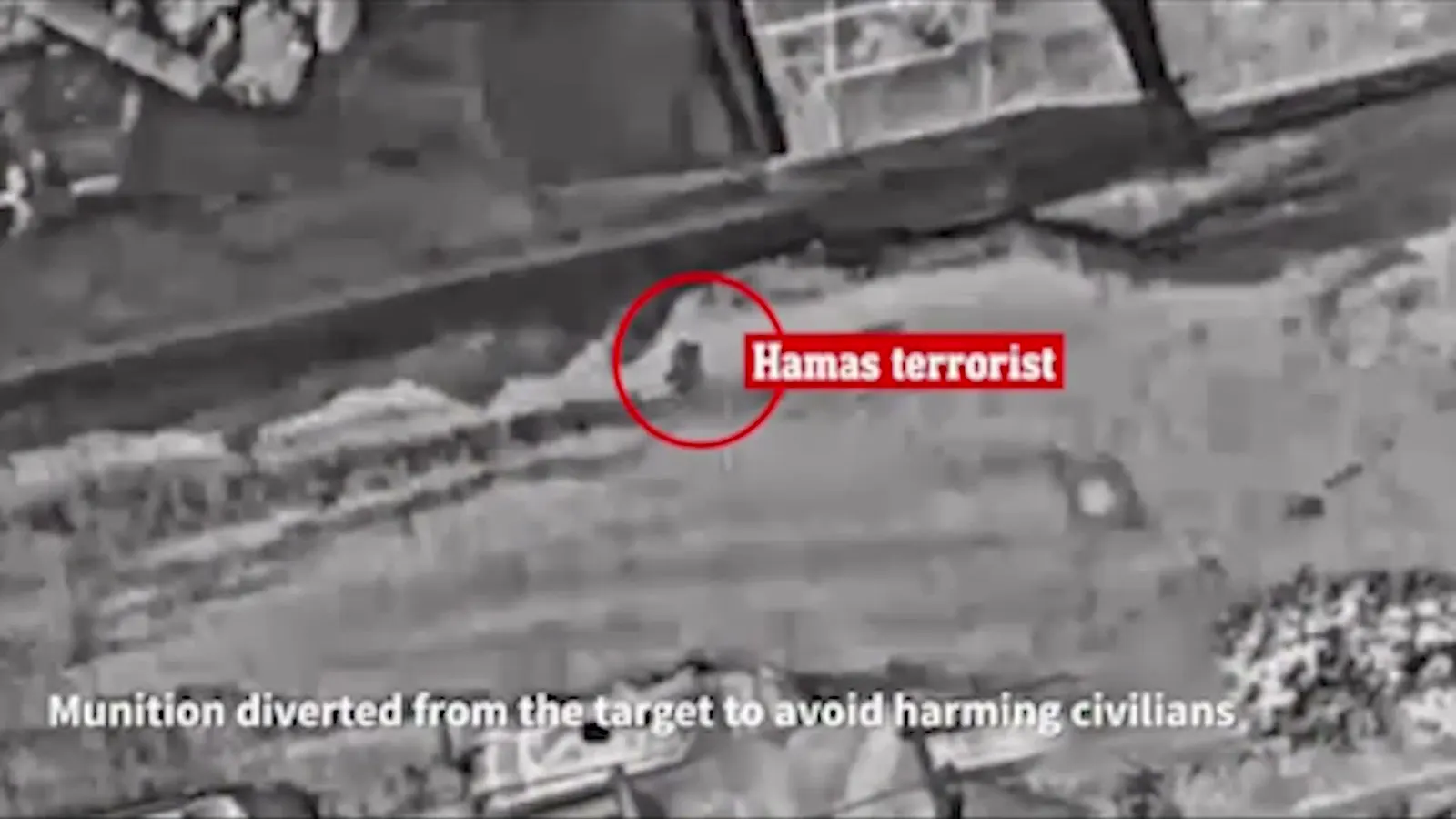
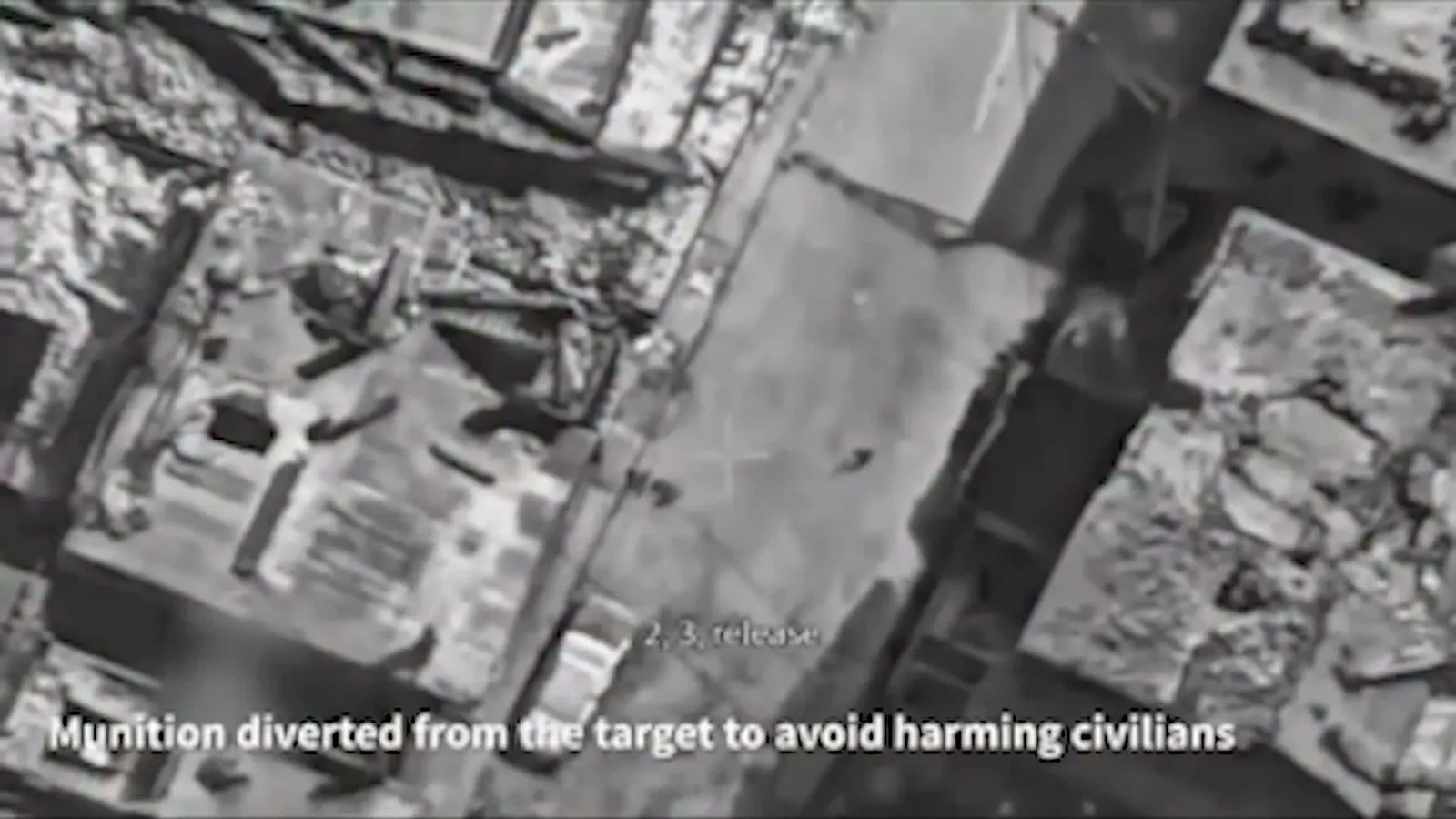
International humanitarian law requires an attacking force to distinguish civilians from combatants and to weigh expected civilian harm against concrete military advantage. It also forbids using civilians to shield military operations. Both duties were tested every day in Gaza. Israel said it issued evacuation orders, published maps of humanitarian zones and opened corridors. Families in Gaza often had nowhere safe to go. This is not a story of unique Israeli cruelty, and not one of collective guilt for the Arabs of Gaza. It is what happens when a terrorist army stores rockets and command posts inside a city of two million people, and a regular army decides it cannot leave that army in place.
The death numbers: what they show and what they hide
No serious account skips the dead in Gaza. The Hamas-run Health Ministry became the world’s default source. The Anti-Defamation League, using the ministry’s figures, reported more than 67,000 deaths in Gaza by the October 2025 ceasefire. The Jewish Virtual Library recorded the ministry’s later claim of 67,183 dead on the eve of that ceasefire, rising to 67,938 by 15 October 2025. Those numbers include people killed by Israeli fire, people killed by misfired rockets, people who died in collapses, and, Israel says, thousands of Hamas and Islamic Jihad terrorists. The ministry publishes no reliable split between terrorists and civilians. In a war like this, that omission is not a technicality. It is the whole argument. Why would Hamas want the world to know how many of its own terrorists are in that total?
Israel has released its own counts of terrorists killed, which outside researchers cannot audit in the rubble. Israeli military deaths are clearer. The Jewish Virtual Library, citing IDF figures, recorded 410 soldiers killed in the ground war by the 19 January 2025 ceasefire, a number that rose again after fighting resumed. Those soldiers include conscripts and reservists, many of them the same age as the young men who fill Gaza’s unidentified-male death lists.
Treat every round number with caution. Early Israeli counts of 7 October were too high, and Israel corrected them. Gaza ministry lists have included unidentified bodies, people listed twice and, at times, natural deaths, according to critics of the data; the ministry itself has said some records were incomplete because hospitals were destroyed. CAMERA has documented how wire services have at times presented those contested totals as settled fact. Abraham Wyner, a statistics professor at the Wharton School, argued that the daily totals rose too consistently to be real and that the civilian share was likely overstated. None of that erases the fact that a very large number of civilians in Gaza, including children, have been killed. And none of it proves the claim, made in some campaigns, that Israel set out to destroy the Arabs of Gaza as such. High civilian death in urban war against an enemy that embeds among civilians is a known, bitter pattern. It is not, by itself, a legal conclusion.
The law, the investigations and the genocide charge
The legal fight that followed is often presented as if a verdict had already been reached. It has not. Genocide, as a legal term, requires specific intent to destroy a people as such. Israel’s stated aims, from Netanyahu’s October 2023 address through the Gideon’s Chariots cabinet decision, were the destruction of Hamas’s army and government, the return of the hostages, and the prevention of another 7 October, not the destruction of the Arabs of Gaza as a people. Critics of the ministry’s data point out that men of fighting age are overrepresented in its own fatality lists relative to Gaza’s population. That pattern is hard to square with a campaign against a people as such.
International humanitarian law binds both sides. Using hospitals and dense neighbourhoods to hide tunnels, rockets and command posts is forbidden when it is done to shield military operations. An attacking army must still distinguish civilians from terrorists and keep civilian harm from being excessive relative to the military gain. Those rules are hard to apply in a city where Hamas mixes the two on purpose. They are not optional, and the IDF fights under strict rules of engagement built on them.
Democracies investigate their own forces, however imperfectly. After Israeli troops mistakenly opened fire on ambulances in Rafah on 23 March 2025, killing 15 rescue workers, the IDF dismissed the deputy commander of the Golani Brigade’s reconnaissance unit and censured a brigade commander, citing professional errors and an inaccurate report. Hamas publishes no such inquiries: not into 7 October, not into holding hostages in civilian buildings, not into rockets fired from built-up streets. That contrast shows what kind of government each side is. Washington has also questioned the other side’s numbers: in June 2024 the U.S. House of Representatives passed an amendment that would bar the State Department from citing casualty figures from the Hamas-controlled Health Ministry.
Where Hamas is in the story
The war that began on 7 October 2023 is several stories at once. A massacre and mass kidnapping that Israel had every right to answer. A campaign whose stated aim was the destruction of a terrorist army, not of a nation. A tunnel war that Hamas chose to fight under homes and hospitals. A civilian catastrophe whose scale is real and whose accounting is contested. And a legal campaign in which the genocide charge has been shouted loudly with no finding that Israel set out to destroy the Arabs of Gaza. If someone offers you a simple cartoon of this war, ask where Hamas is in it.
See the officers’ own account of the war in Naza: The Real Story. Then read how Israel targets Hamas terrorists in Gaza and the genocide accusation.
Sources
- Jewish Virtual Library, The Israel-Hamas War: Casualties jewishvirtuallibrary.org
- Jewish Virtual Library, Operation Iron Sword jewishvirtuallibrary.org
- Jewish Virtual Library, Operations Strength and Sword and Gideon’s Chariots jewishvirtuallibrary.org
- Anti-Defamation League, The October 7th War: A Timeline adl.org
- Anti-Defamation League, Hamas adl.org
- Foundation for Defense of Democracies, Netanyahu Outlines Five Goals of Counterattack on Hamas fdd.org
- Foundation for Defense of Democracies, Hamas Tunnels to Egypt Played Key Role in Arming Hamas fdd.org
- Foundation for Defense of Democracies, 10 Things to Know About Hamas Tunnels fdd.org
- Foundation for Defense of Democracies, Israeli Forces Demolish Largest Terror Tunnel in Northern Gaza fdd.org
- Foundation for Defense of Democracies, Hidden Hamas Headquarters at Gaza Hospital fdd.org
- Meir Amit Intelligence and Terrorism Information Center, Operation Iron Swords (22 February 2024) terrorism-info.org.il
- Foundation for Defense of Democracies, IDF asks Gazans to evacuate eastern Rafah fdd.org
- Foundation for Defense of Democracies, Israeli troops kill Yahya Sinwar fdd.org
- Washington Institute, Will Israel’s New “Chariots” Plan Trample or Strengthen Hamas? washingtoninstitute.org
- Foundation for Defense of Democracies, Israel strikes Hamas leadership in Qatar fdd.org
- CAMERA, AP Casts Hamas’ Contested Fatality Figures as Fact camera.org