






































IDF Spokesperson
Who came through the fence behind Hamas on October 7
Hamas blew open the Gaza fence on October 7. IDF inquiries show more terrorists and looters poured in behind its Nukhba force. Here is what the count says.
Key takeaways
- An IDF investigation compiled by the Jewish Virtual Library, and a U.K. parliamentary commission overview, put about 6,000 people from Gaza inside Israel through 119 fence breaches: some 3,800 Hamas Nukhba, and 2,200 described as other terrorists and looters, or as members of other terrorist groups and civilians from Gaza, not a clean civilian tally.
- The same Jewish Virtual Library compilation describes three successive waves: about 1,200 Hamas commandos, then around 2,000 more terrorists, including members of other groups, then a civilian mob.
- CNN, citing the Kibbutz Movement Rehabilitation Fund, reported that of Nir Oz’s 420 residents, 47 were murdered and 76 kidnapped; the Jewish Virtual Library recorded an eight-hour battle there, and the IDF Be’eri inquiry found about 340 attackers, some 100 of them Nukhba, who murdered, abducted and looted while the army was late.
- The Washington Free Beacon published October 7 video from Be’eri of Hamas terrorists and Gazans in civilian clothes taking hostages; the Jewish Virtual Library recorded Saleh al-Arouri himself saying that after the Gaza Division “fell apart,” “people from the Strip went in.”
The fence was opened on purpose
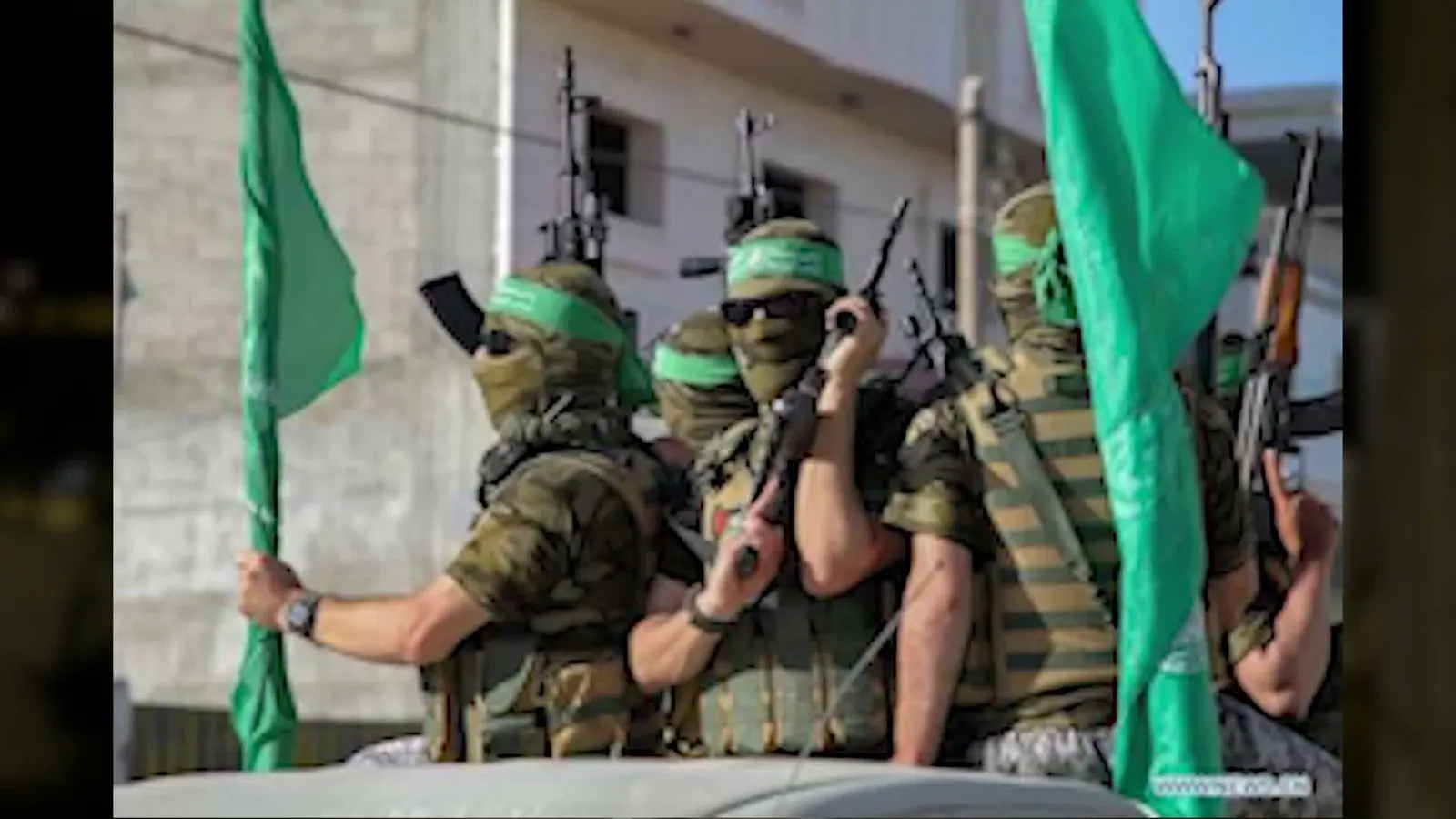
The massacre of 7 October 2023 was not a spontaneous border rush. It was planned. It began in the early morning, on a Shabbat that fell on Simchat Torah, with a rocket barrage and an assault by Hamas and allied terrorist groups, who used explosives, vehicles, motorcycles, paragliders and, in places, boats to break the Gaza barrier and reach civilian communities, a music festival and army posts. An IDF inquiry into Kibbutz Be’eri timed the first movement of terrorists from Gaza toward that community between 6:30 and 6:45 a.m. By the end of the day the border had been breached at 119 points. Compilations of the Israeli and British parliamentary record put the day’s toll at least 1,200 murdered, more than 4,000 wounded, and 251 people taken into Gaza.
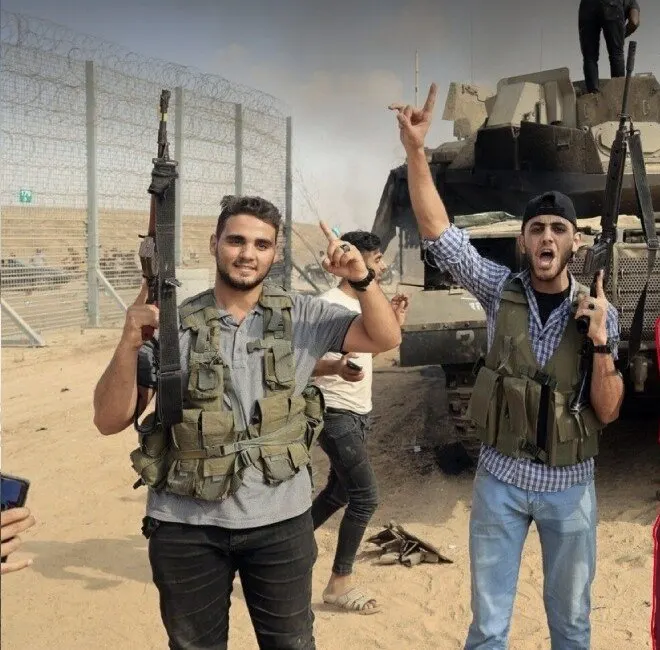
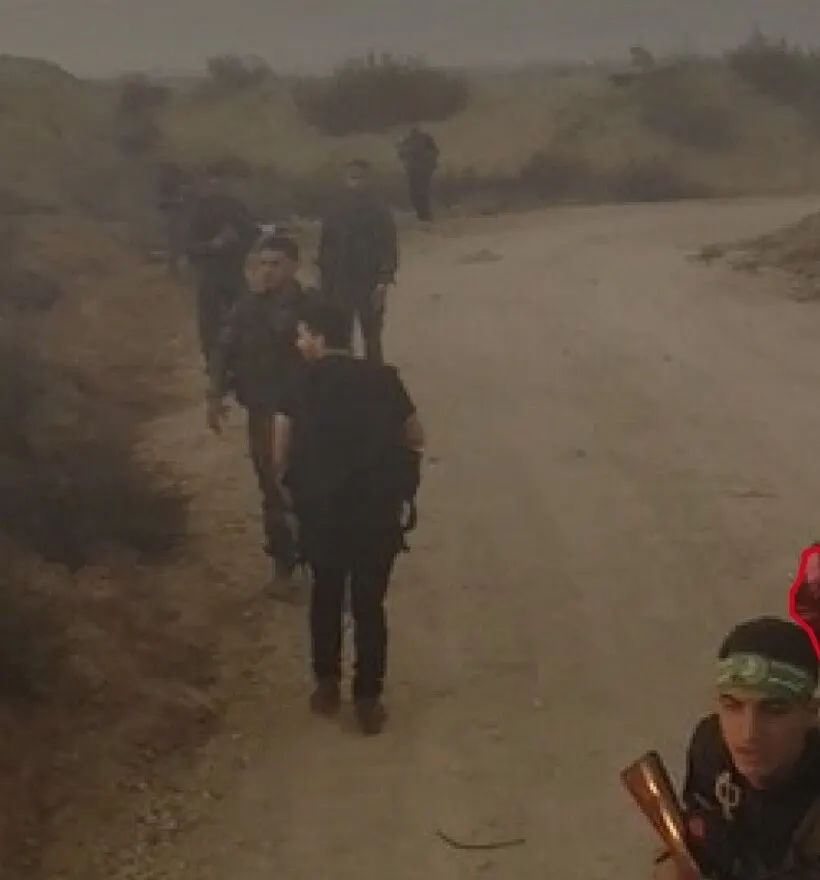
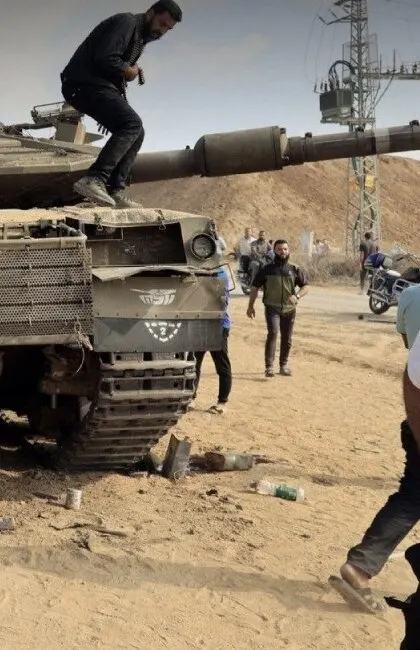
Then comes the question most public argument blurs: who came through those holes after the first terrorist units? Israeli documentation from 8 October 2023 described terrorists pouring through gaps opened by explosions and bulldozers and continuing to enter as the morning went on; they stormed villages, murdered inhabitants, set buildings on fire, and in several cases stole whatever they could carry. Photographs and video from that morning show people on the Israeli side of the fence after the terrorists were already in. The pictures alone do not show who was a trained terrorist and who was not. They do show that the breach was used by far more people than a small commando force.
A later Israeli compilation describes three cumulative waves, not one raid: about 1,200 Hamas commandos in the first half hour; then, between roughly 7 a.m. and 9 a.m., around 2,000 more terrorists, including members of other groups; then a civilian mob, which that account says Hamas’s military commander incited. That describes who came. It is not a census of every person who walked through a hole in the fence.
How the numbers were built, and where they stop
Early Israeli and foreign reporting spoke of roughly 3,000 infiltrators, sometimes described as terrorists and some civilians. Then an IDF investigation, as summarized by the Jewish Virtual Library, counted about 6,000 people from Gaza inside Israel, almost double the earlier public figure, through 119 breaches rather than the smaller number of gaps cited before. Of those 6,000, some 3,800 were identified as Nukhba, Hamas’s assault troops, together with other members of the Izz al-Din al-Qassam Brigades. A further 2,200 were described as Arabs from Gaza, “including both terrorists and looters.” Fox News, citing an August 2024 IDF assessment, used the same 6,000 and “more than 3,800” Nukhba figures and called the whole body “terrorists.” The Anti-Defamation League wrote of approximately 6,000 “Hamas and other terrorists.” A U.K. All-Party Parliamentary Group overview, also carried by the Jewish Virtual Library, used the same split: 3,800 Nukhba and Qassam terrorists, supported by 2,200 individuals from other terrorist groups, including Palestinian Islamic Jihad, “and civilians from Gaza.”
That last phrase is the hinge, and it is easy to misread. The investigation, as published in those summaries, did not isolate a number of unarmed civilians. It grouped other terrorists with people classified as looters, or with civilians from Gaza who joined the assault. In October 2026 Defense Minister Israel Katz, presenting Military Intelligence figures, still spoke of approximately 6,000 “terrorists who invaded Israel,” about 4,000 of them killed by then; earlier IDF assessments had put the invading force at about 5,600. The 6,000 figure is a military order of magnitude that has moved in the press, not a line-by-line census. Read it that way and three things hold: far more people crossed than the first day’s estimates, most of those identified were Hamas’s elite force, and a large remainder mixed other terrorists with people who came to steal.
Open-source video later released by researchers and reported by the Washington Free Beacon reaches the same conclusion from different material. Clips from Kibbutz Be’eri show Hamas terrorists taking women and children at gunpoint, and at least one man in civilian clothes binding an Israeli woman’s wrists; the researchers said she was murdered after the recording. The footage gives no separate total for civilian looters. It does show that people who were not in Hamas uniform took part in the assault.
What the community investigations show
The IDF community inquiries, presented to survivors and then summarized in English, are precise about places and less precise about who each person was.
Kibbutz Nir Oz, close to the border, is among the starkest cases. CNN, citing Neri Shotan of the Kibbutz Movement Rehabilitation Fund, reported that of 420 residents, 47 were murdered and 76 kidnapped, and that 93 houses were destroyed, only six escaping damage. A resident who hid in a safe room told CNN that by 7:50 a.m. he understood there were “no forces.” The Jewish Virtual Library recorded that the battle there lasted about eight hours; a resident, Lotus Lahav, told the New York Times that about 350 to 400 people were present when the attack began and only about 200 were left when it ended. The U.K. parliamentary overview said Nir Oz saw the most kidnappings, 75 people taken hostage alongside seven abducted bodies, and that the Gaza Envelope communities were attacked by Hamas, other terrorist groups and civilians from Gaza, who destroyed homes, committed atrocities, systematically looted and set fire to properties. The army’s language in related inquiries spoke of terrorists. Other summaries of the same events used “Palestinians” or “Gazan civilians,” wider words that can include people outside any military unit. The difference matters, and no name-by-name list has closed it yet.
Elsewhere the pattern repeats: an organized first strike, then hours with the fence standing open. At the Nahal Oz base, according to a BICOM summary of the IDF investigation compiled by the Jewish Virtual Library, around 65 Hamas Nukhba terrorists infiltrated just after 7 a.m.; a second wave arrived around 9 a.m., and kidnappings from the base began around 10 a.m. At Kfar Azza, the same compilation recorded around 100 infiltrators, “both Hamas terrorists and other Gazans,” with most residents killed in that first hour, then a second wave, and an estimated 250 to 300 terrorists free to murder and abduct before larger army forces arrived after noon. At Be’eri, the IDF inquiry found that approximately 340 terrorists infiltrated, including about 100 Nukhba, who carried out massacres, abductions, looting and other crimes; 101 civilians were killed and 30 hostages from the kibbutz were taken, while the civilian rapid-response team held a line for hours and the army struggled to form a clear picture until the afternoon. At the Erez crossing, an IDF investigation found a first elite Nukhba unit, then a larger wave of Hamas, Islamic Jihad and unaffiliated terrorists; after the first wave subsided, a second wave of roughly 100 terrorists arrived around 10:30 a.m. and looted and burned the site for hours. None of these reports, in the English versions available, splits Nukhba, other factions and civilians at each doorway. All of them show the same thing: once the barrier was down and the army was late, Israeli villages lay open for hours.
Abduction was the plan. Theft came with it.
Hostage-taking was a war aim of the terrorist groups, not a side effect of looting. The Anti-Defamation League, the Jewish Virtual Library’s hostage compilation and the U.K. parliamentary overview all state that 251 people were taken into Gaza. Those figures describe the crime. They do not say how many abductors were Hamas, how many belonged to other factions, and how many were unaffiliated men who seized a person because the fence was open.
Israeli reporting and some local officials say people outside the first commando wave took part in killings and in moving captives. The Jewish Virtual Library records Saleh al-Arouri, the Izz ad-Din al-Qassam commander, later denying that Hamas itself committed the atrocities and claiming that after the Gaza Division “fell apart,” “people from the Strip went in” and people were killed. Gadi Yarkoni, mayor of the Eshkol Regional Council, told the Washington Free Beacon that “the second wave of Arabs who came into the country were just as cruel as the terrorists of the first wave,” and that “it was not only Hamas who came to slaughter us.” Read al-Arouri carefully. His words admit that Hamas’s own leadership saw a follow-on influx. They are not a credible denial of Hamas’s central role: the Nukhba assault, the maps, the filming and the hostages taken to Gaza are documented by the IDF inquiries, by the attackers’ own cameras and by later video from Be’eri. He tries to push the bodies onto a crowd. The crowd does not erase the chain of command. It came through a hole Hamas made.
On looting, the evidence is stronger than for a civilian kidnap tally and weaker than any round number. Homes in the Gaza envelope were stripped. The Bank of Israel said credit cards and bank-account information taken from victims were being misused. The Be’eri inquiry listed looting among the crimes of the 340 attackers. The parliamentary overview recorded systematic looting across the envelope. Israeli investigations of Nir Oz and other kibbutzim describe houses damaged or emptied on a scale far beyond anything a small raiding party would need for a military mission. What is not proven, and we say so plainly, is any precise share of stolen property or hostages that belongs to civilians alone. Some of the men in civilian clothes were terrorists. Some of the unarmed people were thieves. Some did both. The sources have not sorted them yet.
Two false stories, and the record between them
Hamas planned and led a massacre of civilians. Other terrorist groups from Gaza joined it. Once the fence was open, more people from Gaza walked or rode through: men who killed and abducted, and men, and in some accounts unarmed people, who stole. Israeli military estimates of the total who crossed rose from about 3,000 to about 6,000; the published breakdowns still group other terrorists with looters rather than isolating civilians. Community inquiries show hours of undefended ground in which anyone who reached a breach could enter a house.
That is enough to throw out two false stories. One says only a handful of Hamas specialists were there. The other says “Gaza” as a whole, meaning two million people, stormed Israel. Neither survives the record. A terrorist army blew a hole in a border, and through that hole came its terrorists and a smaller, poorly counted mass of people who treated Israeli homes as prey. The first group is named in IDF material. The second is real, visible on camera, and in the official numbers still mixed with other terrorists rather than counted on its own.
So when someone tells you October 7 was a few gunmen, or that it was all of Gaza, ask for their count. Then show them this one.
Hear the officers who fought the war that followed in the film. Then read the morning the fence failed on October 7 and what investigators documented of Hamas's October 7 atrocities.
Sources
- Jewish Virtual Library, The Israel-Hamas War: The Massacre jewishvirtuallibrary.org
- Jewish Virtual Library, The Israel-Hamas War: The Atrocities jewishvirtuallibrary.org
- Jewish Virtual Library, The Israel-Hamas War: The Hostages jewishvirtuallibrary.org
- Jewish Virtual Library, IDF Inquiry: The Battle of Kibbutz Be’eri jewishvirtuallibrary.org
- Jewish Virtual Library, APPG UK-Israel: 7 October Parliamentary Commission Report jewishvirtuallibrary.org
- ADL, The October 7th War: A Timeline Of Key Events and Issues adl.org
- Terrorism Info, The Iron Swords – the First Gaza War (updated 8 October 2023) terrorism-info.org.il
- Fox News, IDF claims to have taken out Hamas commander who participated in Oct 7 foxnews.com
- Washington Free Beacon, New Footage Shows Hamas Terrorists—and Gazan Civilians—Kidnapping Israeli Women and Children on Oct. 7 freebeacon.com
- CNN, After two years of war, some Israelis are moving to the Gaza border cnn.com
- The Daily Wire, Israel Says It Has Killed Two-Thirds Of October 7 Attackers dailywire.com