











































The creators
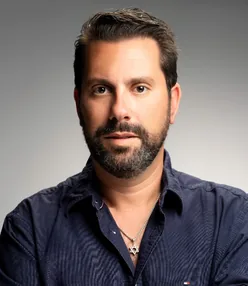
Hagay Gutman
Content creator · Director · Editor · Musician
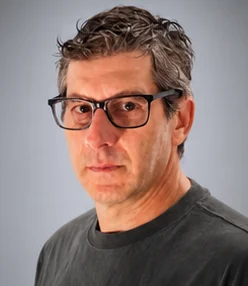
Hagay Gutman is an Israeli content creator, director, editor, and musician working at the heart of Israel's media and television industry. He serves as chief editor of morning television shows while also leading documentary projects and successful web series. He has recently gained significant international exposure as one of the creators and directors of Naza: The Real Story, a documentary that presents the Israeli perspective on the war in Gaza to a global audience.
Watch the filmFrom Kiryat Ata to the stage
Hagay Gutman grew up in Kiryat Ata, in northern Israel. A piano teacher saw something in him and got him a music scholarship at Kibbutz Yagur. He served in the army with the Nahal paratroopers, then spent about four and a half years travelling through the United States, Canada and South America. He wrote his first song on the Cordillera Huayhuash trek in the Andes.
Back home he studied voice, and there met the lyricist Ari Bona, who became his writing partner for years. He sang in the Karaoke Live project and then with his band, which toured Israeli schools through the national arts-in-education program.
Television
Gutman later moved from the stage into television. He is the editor of Israel This Morning, Channel 14's morning show. With the show's producer, Yochai Gueta, he makes This Is How You Make TV, a comedy web series that pokes fun at what happens behind the cameras, and he is developing a sitcom.
Back to music
He never stopped writing songs. In 2025 and 2026 he returned with a run of singles in a grown-up rock sound rooted in the 1980s and 1990s, eight of them by 2026. "If you don't get lost, you don't reach the place you need to be," he told an interviewer. "The old Gutman tried to prove he was good. Today's Gutman knows he is."
Cutting Naza
On Naza: The Real Story Gutman was director and editor. He cut the film in twelve days from raw footage and hours of testimony. "We didn't get a shekel from anyone," he said. "We mostly had goodwill and initiative." For him the point was to show the other side of the war: "It mattered to me to bring the other side, the true and just one, and show it without apologizing."